A cat that does not return after its usual outing triggers a understandable stress mechanism, but the response must be methodical. Managing the I-CAD file, understanding the legal framework regarding straying, and having a search strategy adapted to feline behavior make the difference between weeks of waiting and a quick return.
I-CAD File and Microchip: The Lever Most Owners Underutilize
We regularly observe that panicked owners launch physical searches without first checking and updating their I-CAD file. This is a misprioritization. The loss report on I-CAD must precede any other action.
When a veterinarian, a shelter, or a pound scans the microchip of a found cat, the notification goes directly to the national file. If your contact details are outdated (old phone number, previous address), the chain breaks. Log into your I-CAD account, verify that the main phone number is active, and immediately report the loss.
Also check the microchip reading notifications in your account. Some cats are scanned at veterinary clinics without the practitioner being able to reach the owner. These readings appear in the file’s history. For those looking to find a cat that hasn’t returned, this check can reveal that the animal has already been located.
A cat identified by microchip has significantly higher chances of returning than an unidentifiable cat. Without identification, the captured animal enters the pound system with a limited holding period.
Feline Straying and Pound: What the Rural Code Says
The Rural Code (article L211-23) defines a stray cat as an unidentified cat found more than 1,000 meters from its home, or more than 200 meters from residences. Article L211-19-1 strictly prohibits this straying, with fines of up to 750 euros and the possibility for the mayor to have the animal captured.
In practice, this means that your unidentified cat seen far from home can be captured and placed in a pound without you being notified. The pound fees are the owner’s responsibility.
We recommend integrating checks of municipal pounds as soon as the first hours of disappearance, including those located beyond your immediate neighborhood. A cat frightened by a noise, chased by a dog, or accidentally caught in a vehicle can end up several kilometers from home.
Nighttime Ground Search: Technique and Area Adapted to Feline Behavior
The majority of domestic cats stay within a limited perimeter around their home. An injured, trapped, or scared cat does not respond to calls during the day. Nighttime searching between 10 PM and 2 AM is the most effective, because ambient noise decreases and the immobile cat dares to come out of its hiding place.
The ground search method is based on three principles:
- Go out with a powerful flashlight and sweep low areas (under cars, behind containers, in dense hedges). A cat’s eyes reflect light and reveal its position even from a distance.
- Call the cat in a low and steady voice, not by shouting. A stressed cat freezes more in response to loud sounds. Gently shaking a bag of familiar treats produces a more effective familiar stimulus than the voice.
- Place a worn (unwashed) garment and used litter in front of your entrance or in the garden. The owner’s body odor and the pheromones from the litter provide olfactory markers that the cat can detect from several hundred meters away.
Repeat this routine every night for at least a week. A cat accidentally locked in a garage or shed may not show up until several days later, when hunger and thirst drive it to meow.
Neighbors and Garages: Systematic Checking
Ask each neighbor in the immediate vicinity to open their outbuildings (garage, cellar, shed, storage). A curious cat that sneaks into an open space can get trapped as soon as the door closes. This scenario is one of the most common causes of prolonged disappearance for a cat that usually does not wander far.

Search Posters and Online Reporting: Mistakes That Reduce Your Chances
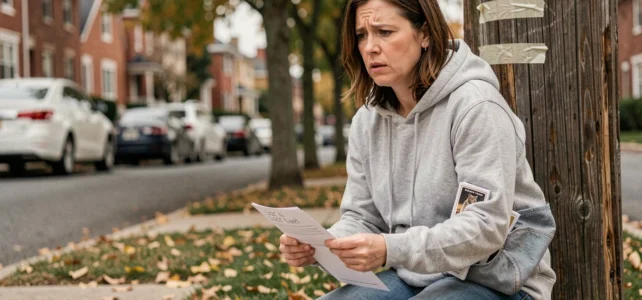
Paper posters remain a relevant tool, provided they are designed correctly. A clear, colored photo showing the cat from the front and side increases the likelihood of identification by a passerby. Mention the cat’s name, your phone number, the specific neighborhood of disappearance, and the date.
We see too many posters with a blurry photo, small text, and no geographical indication. This type of poster does not work.
Online, post in local groups dedicated to lost animals (Facebook, Pet Alert for your department). Include the microchip number if the cat is identified. Also check the found animal listings on these same platforms: a few days’ delay between the “found” posting and your search can cause a report to be missed.
Veterinarians and Local Shelters
Contact veterinary clinics within several kilometers of your home. Provide a photo and the microchip number. Do the same with local shelters and associations. A wounded cat picked up by an individual is often taken to the nearest veterinarian, not necessarily yours.
Renew these contacts every 48 to 72 hours. Teams change, animals arrive continuously, and a single report risks getting lost in the flow.
The search for a lost cat requires consistency rather than occasional intensity. A rigorous protocol (up-to-date I-CAD, verified pounds, nighttime searches, clear posters, regular follow-ups) covers the vast majority of disappearance scenarios. Time works against you, but a cat hiding nearby may reappear several weeks after its disappearance if conditions are favorable.