A flower bed planted in April that fades by late August, followed by a bare garden for six months: we all know the scenario. The problem isn’t a lack of flowers, but a poorly staggered blooming schedule and soil that’s rarely prepared to cope without intensive watering. Creating a garden that blooms all year round means planning in layers and by season, while taking local water restrictions into account before choosing even the first perennial.
Watering restrictions: the factor gardeners forget
We think about color, height and exposure. We rarely think about local water-use restrictions. Local rules may completely prohibit watering flower beds during droughts, sometimes as soon as the heightened alert level is reached. These restrictions vary from one municipality to another and change as new orders are issued.
In Foug, for example, the guidelines distinguished between trees and shrubs planted in the ground less than two years earlier, which could still be watered, and established lawns and flower beds, which could not. Check your municipality’s guidelines on VigiEau before drawing up a planting plan to avoid ending up with a thirsty flower bed in midsummer and no permission to water it.
A return to rainy weather doesn’t solve everything, either. In Creuse, even after restrictions were eased following rainfall, groundwater levels remained fragile and conditions still depended on the next rainfall. The lesson for gardeners is clear: mulching, rainwater collection and drought-tolerant planting are better than relying on watering that depends on the weather. You can find plant selections suited to these conditions at https://www.lejardindemilie.fr, with a filter for drought resistance that makes planning easier.
Perennials and bulbs: create a succession of blooms throughout the seasons
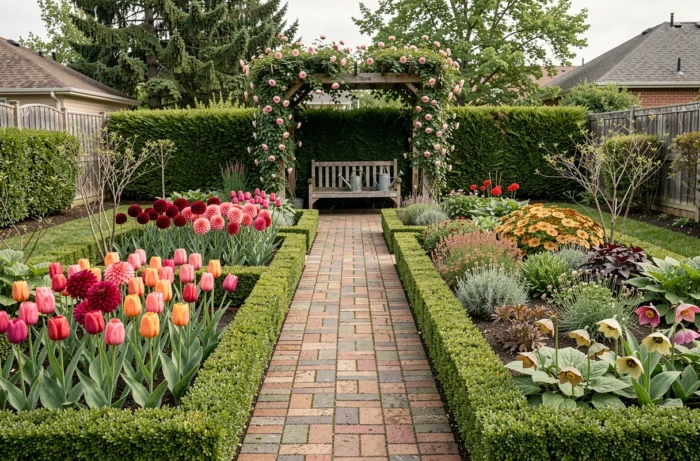
The principle is simple on paper: every month of the year should have at least two or three species in bloom. In practice, we often fall back on the same handful of summer plants.
Spring: get the cycle started early
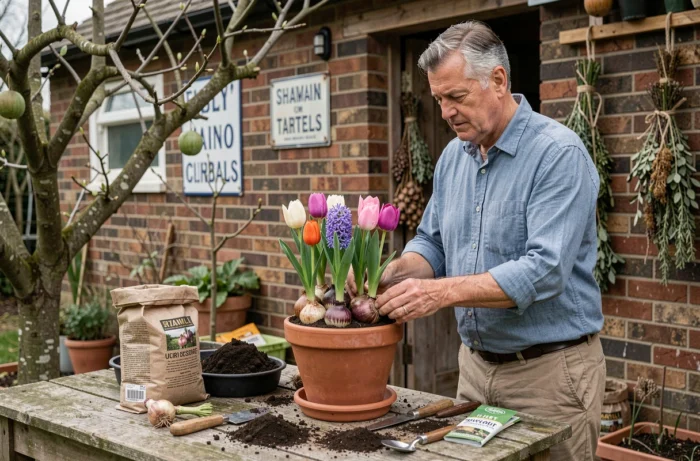
Bulbs do most of the work between February and May. Daffodils, crocuses and anemones take turns blooming without demanding much from the soil. Plant them in fall, and they’ll return year after year as long as the soil drains well.
Early-flowering perennials complete the picture: lungworts, hellebores and primroses brighten borders from late winter onward. The goal isn’t to plant lots of them, but to spread flowering times over three months rather than two weeks.
Summer: don’t rely entirely on annuals
Petunias and geraniums add color quickly, but they need constant watering and must be replaced every year. Summer-flowering perennials such as coneflowers, gaura and shrubby salvias last for several seasons and cope better with heatwaves.
Often treated as purely decorative, roses can bloom continuously from June to October if you choose repeat-flowering varieties. A well-mulched rose in properly amended soil needs less water than a bed of annuals.
Fall and winter: the two overlooked seasons
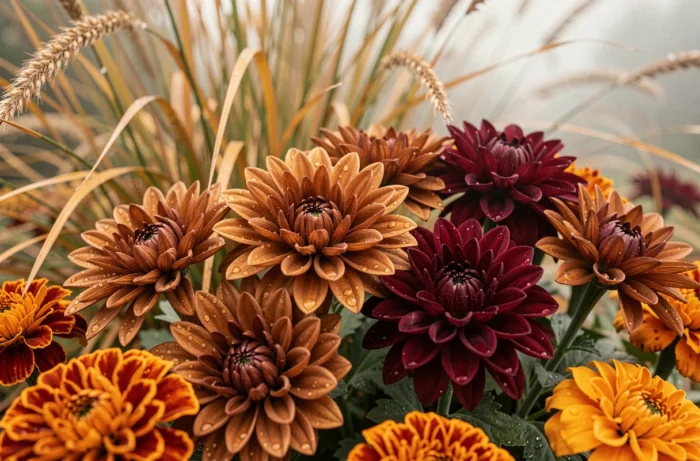
Asters, sedums and ornamental grasses keep the garden colorful through November. Grasses have an added advantage: their dried flower heads remain decorative all winter, so there’s no need to clear the bed too early.
For winter interest, rely on evergreens such as boxwood, sweet box and mahonia, along with ornamental bark. A red-twig dogwood or a white-barked birch gives the garden structure even when nothing is in bloom. A welcoming winter garden depends not on flowers, but on textures and silhouettes.
Prepare the soil before planting a flower bed
You can choose the best perennials in the catalog, but if the soil is compacted or poorly drained, half of them will die during their first winter. Soil preparation is the most worthwhile investment in the garden—and the one most often neglected.
- Test drainage by digging a 30 cm hole and filling it with water. If the water remains for more than an hour, amend the soil with coarse sand or wood chips before planting.
- Spread mature compost over the top 20 cm of soil, mixing a generous layer into the existing soil. Healthy soil retains water better and nourishes roots without chemical fertilizer.
- Mulch immediately after planting with wood chips, fallen leaves or flax straw. Mulch reduces evaporation, suppresses weeds and protects roots from frost.
- Don’t work waterlogged soil: wait until it crumbles between your fingers. Digging in mud creates compact clods that suffocate roots.
The depth of soil preparation varies depending on the plants. Bulbs need only 15 to 20 cm of loosened soil, while roses and shrubs need a planting hole deeper and wider than their root ball.
Arrange flower beds for year-round visual appeal
A flower bed where every plant is the same height looks flat, whatever the color palette. Arrange plants in three layers: ground cover along the edge, medium-height perennials in the middle, and shrubs or tall grasses at the back.
Planting at least three or five of each species together creates a much clearer massing effect than a mosaic of individual plants. A single plant disappears visually; a group of five creates a cohesive patch of color.
Color choice matters less than you might think. A bed planted in a single palette—white and green, pink and purple, or yellow and orange—always looks more polished than a mix of every shade. You can choose a color theme for each area instead of aiming for the full rainbow.
Leaving faded flower heads in place in fall serves two purposes: it maintains visual interest through winter and provides shelter for beneficial insects. You can wait until the end of February, just before new growth begins, to clear everything away.
A garden that blooms all year round doesn’t need more plants, just better timing. Well-prepared soil, consistent mulching and a selection of perennials suited to local water restrictions make the difference between a flower bed that lasts three seasons and a garden that stays alive all year.