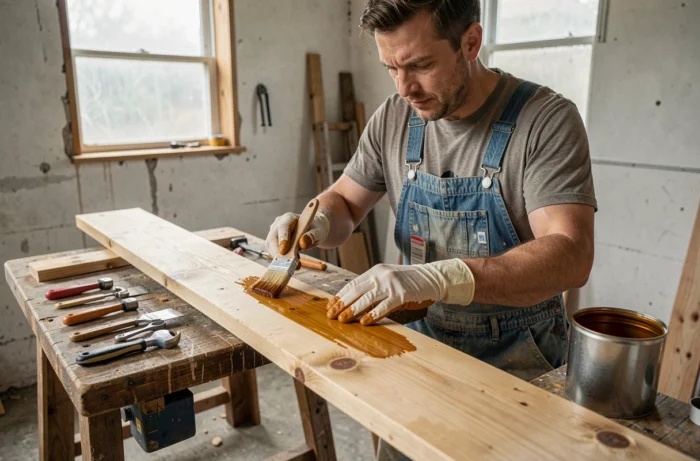
You just spotted a Parkside polyurethane stain in the aisle at Lidl, and you’re hesitating. The price is attractive, the container is large, but you’re not sure if this product will really protect your fence or garden shed as well as a specialized brand. This question often arises among DIY enthusiasts, and the answer depends on criteria that the label does not always highlight.
What the Parkside technical data sheet doesn’t say about the composition
Before comparing performance, you need to look at what’s in the container. In this regard, the Parkside stain poses a transparency issue. Unlike brands like V33, Bondex, or Xyladecor, which publish detailed safety data sheets, the accessible documentation from Parkside remains incomplete on several points.
It is not clear whether the formula contains biocides, MIT/BIT-type preservatives, or isocyanates. This is not a minor detail. European regulations distinguish decorative stains from biocidal wood treatments, and this difference changes the very nature of the protection offered.
By comparison, Galtane’s Tullo stain shows a VOC content of less than 0.2 g/l and announces the absence of biocides in its product sheet. When you’re looking for a reliable Parkside polyurethane stain Lidl review, keep in mind that checking the safety data sheet of the container is the only way to know what you’re applying to your wood.
Wood preparation before staining: the factor everyone underestimates
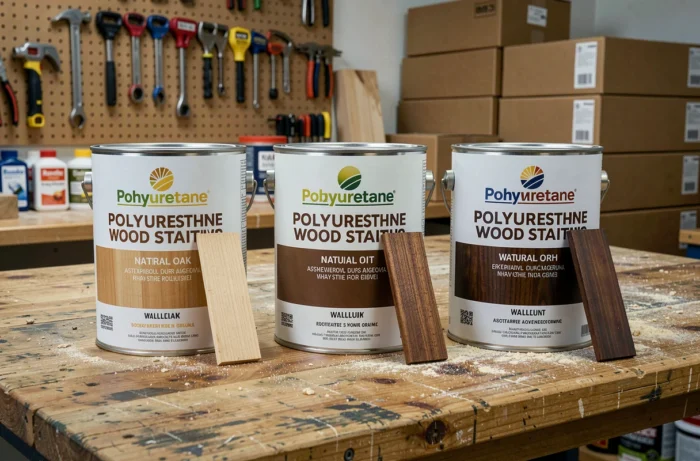
You may have noticed that a stain peels after a few months on a terrace, while it lasts for years on a shutter? The difference rarely comes from the product. It is the preparation of the substrate that determines the durability of the result.
Moist, dirty, or poorly sanded wood prevents the stain from properly penetrating the fibers. This is true for Parkside as well as for Bondex or V33. The technical data sheet from Biofa, a manufacturer of solvent-free stains, specifies several points that competing contents overlook:
- The substrate must be dry before application. Wood that has been rained on the day before will repel the product on the surface, creating a film that will peel quickly.
- Tannic woods (oak, chestnut) or exotic woods require specific treatment, as their tannins can rise through the stain and cause stains.
- Raw sawn wood absorbs up to twice as much product as smooth sanded wood, which alters the actual cost of the project and the number of coats needed.
In other words, applying a Parkside stain on properly prepared wood will yield a better result than a high-end stain on a poorly prepared substrate. This observation reverses the usual logic of “the more expensive, the better protected.”
Application with a spray gun or brush: impact on Parkside’s finish
A video test shows the application of the Parkside stain using a Parkside painting station. The result is interesting, but it requires nuance. The spray gun alters the thickness of the coat and the precautions for use.
With a brush, you control the penetration into the wood fiber by fiber. The application is slower, but the stain adheres better to vertical surfaces and hard-to-reach areas. The spray gun, on the other hand, lays down a more uniform coat on large flat surfaces (cladding, fence), but it generates a spray mist that requires wearing a mask and protecting surrounding areas.
For a garden shed or fence, the spray gun saves time. For shutters, an outdoor staircase, or woodworking pieces, the flat brush remains more suitable. This choice of tool influences both the final result and the quality of the stain itself.
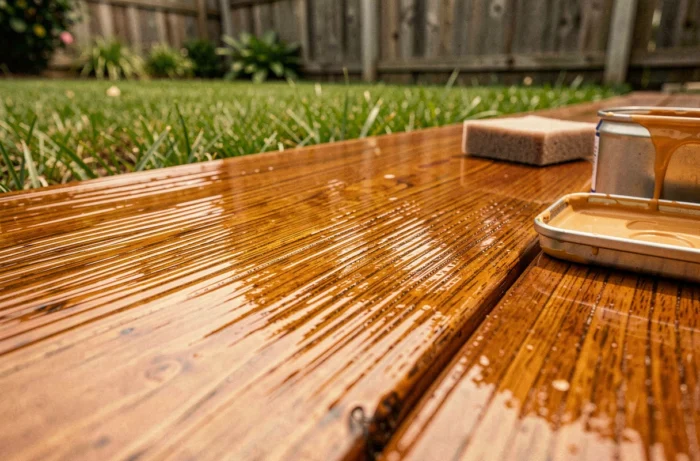
Parkside stain versus Bondex, V33, and Xyladecor: what really changes
Comparing these brands solely on the price per liter doesn’t make much sense. Here are the criteria that make a concrete difference at the time of purchase and application:
- Availability and stock: Parkside is sold during occasional promotions at Lidl. When the stock is depleted, you can no longer find the product. Bondex and V33 are permanently available at hardware stores and DIY superstores.
- Range of shades: specialized brands generally offer around ten shades or more, sometimes with the possibility of mixing. The Parkside range is more limited.
- Technical documentation: V33 and Bondex provide detailed sheets on drying times between coats, consumption per square meter, and application conditions (temperature, humidity). This information is sometimes absent or cursory with Parkside.
- Water-based or solvent-based formulation: several competitors now offer water-based stains, which are easier to clean and less odorous. Always check the base of the Parkside product before purchase.
The polyurethane in the Parkside formulation provides superior mechanical resistance compared to classic stains. This resin hardens as it dries and offers better resistance to abrasion. On a gate or railing used daily, this is a real advantage over standard alkyd stains.
However, this hardness can become a disadvantage during renewal. An aged polyurethane film requires more sanding than a classic stain that wears away gradually without forming a hard film.
The choice between Parkside and a hardware brand comes down to a trade-off: low price and opportunistic purchase versus product follow-up, complete documentation, and permanent availability. For a one-off project on a shed or fence, the Parkside stain fulfills its role if the wood is well prepared. For regular maintenance over several years, being able to repurchase the same product in the same shade simplifies life.